Narrative & Nourishment
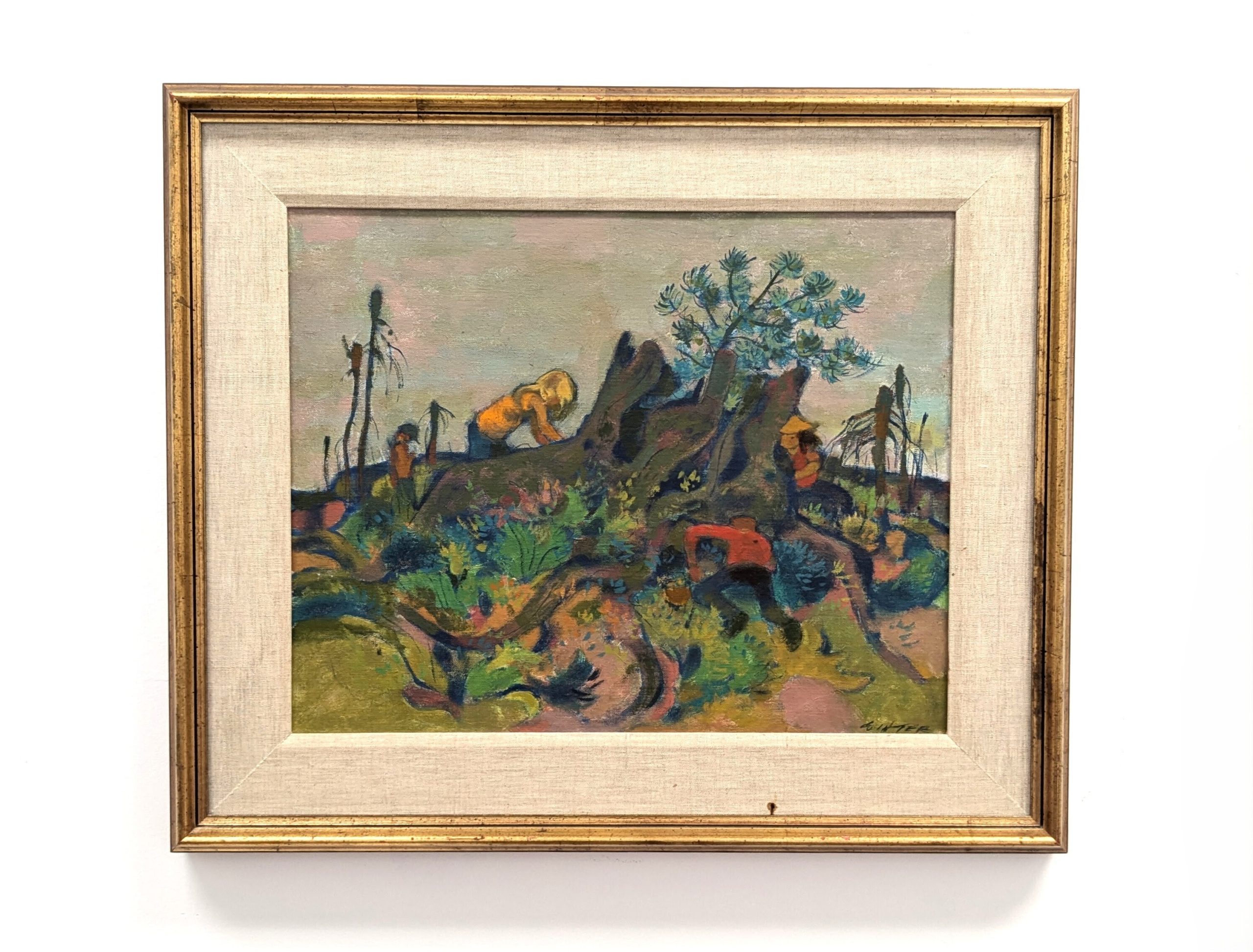
Narrative & Nourishment explores how food in painting becomes a way to tell stories about identity, memory, and connection.
Featuring works drawn exclusively from the AGN’s Permanent Collection, the exhibition highlights how artists use everyday meals and ingredients to express culture, emotion, and shared experience. It invites viewers to see food not only as sustenance, but as a meaningful part of our personal and collective stories.
The act of eating is one of humanity’s oldest rituals—simple yet endlessly expressive. A meal can be a moment of quiet reflection, a celebration, a cultural marker, or a necessary pause in the midst of labour. Narrative and Nourishment brings together works from the AGN’s Permanent Collection that explore how artists have used food, drink, and the spaces around them to tell stories about connection, culture, and the rhythms of daily life.
Like Michael Behnan’s Sundae—which depicts a woman quietly enjoying a sundae—several works in the exhibition capture the intimacy and introspection that can accompany a shared—or unshared—meal. These scenes remind us of the familiar gestures of dining: the conversation that drifts between bites, the pause to admire a view, the momentary escape from the demands of everyday life. In these still, reflective moments, food becomes more than sustenance; it becomes a companion to memory, emotion, and presence.
In Richard Robertson’s Still Life with Shells & Apples, nourishment takes on a quietly meditative form. By focusing on the objects themselves—the smooth, rounded apples and textured shells—Robertson emphasizes reflection, attentiveness, and the beauty of simple, everyday forms. While no meal is depicted directly, the work resonates with the exhibition’s themes, reminding us that sustenance is also about stillness, contemplation, and the small, grounding moments that structure daily life.
Other works burst with the lively energy of communal gatherings. In Parade de mode, Pierre Lussier captures this spirited atmosphere through a vibrant procession that echoes the social electricity found in bustling cafés—moments where conversations overlap, laughter rises, and stories travel from one person to the next like shared dishes. These works reveal how nourishment is not only physical but deeply social: a catalyst for connection, celebration, and collective experience.
Still others turn our attention to meals taken in haste or necessity. In David Blackwood’s Seabird Hunters Return Home to Braggs Island, food is portrayed not as a luxury, but as the essential fuel that sustains people through long hours, demanding labour, and the enduring challenges of daily life. The work underscores how nourishment becomes a lifeline—deeply tied to survival, community, and the rhythms of work and place.
In other works, nourishment is suggested less literally through the gestures, rituals, or objects that accompany it. In Alexander Calder’s Poisson pas Ancres, the playful depiction of a floating fish evokes the lightness and rhythm of movement, hinting at the joy and vitality that accompany sustenance. While not a scene of eating, the lithograph resonates with the exhibition’s themes by celebrating the forms and flows that underlie everyday life, much like a meal structures time and experience. Calder’s buoyant lines remind us that nourishment is not only physical but also imaginative—a source of energy, delight, and creative inspiration.
Together, the artworks in Narrative and Nourishment trace the many ways that eating shapes our personal and collective stories. Whether joyful or routine, leisurely or hurried, each meal reveals something about who we are, where we gather, and how we share our lives with others. This exhibition invites viewers to consider the moments of nourishment—literal and metaphorical—that connect us across time, culture, and experience.
Olinda Casimiro | Executive Director
January, 2026
January, 2026